The right way to change Ts&Cs – Google learnt it’s lesson

It’s not long ago that Google was described as “the evil empire” because of its perceived intent on hoovering up all the data it could about us in the endeavour to “provide the best search experience for its users”. Baloney of course – they just wanted to drive the monetisation of their platform as far as they thought they could get away with, and by now you shouldn’t pay too much attention to the search results that appear at the top of a Google search – they’ve almost always been “paid-for”.

However, out of bad publicity they learned a lesson. When changing terms and conditions of use, or service, its best to explain clearly, and in advance, what they want, and expect, to do, and invite comment. That was most certainly missing from Facebook’s recent debacle with WhatsApp. So to show how it perhaps should be done, I’me including some recent screen shots from Google over the past few months …

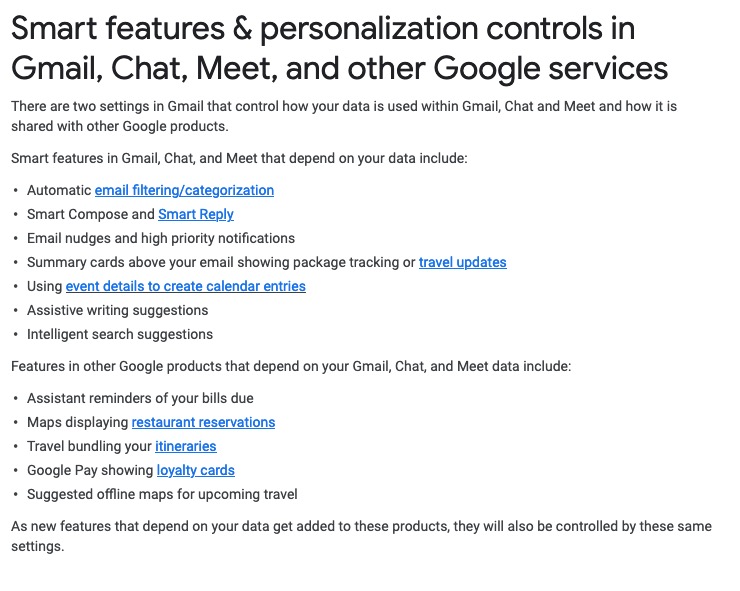
A very recent change to Google services that is being proposed and communicated to users in an email. This was the first email sent …
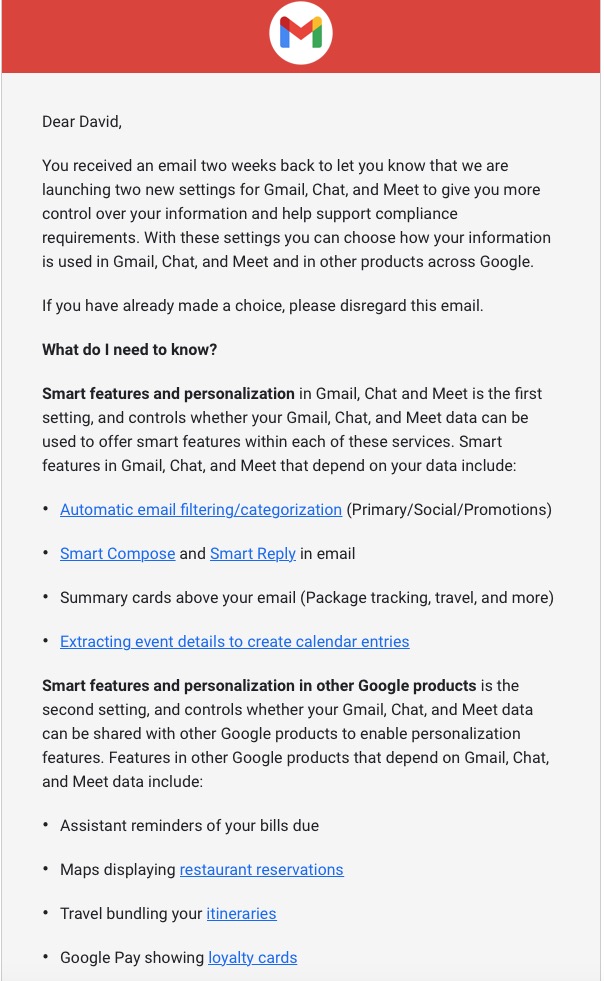
… which was followed up with this one, which prompted me to do something about it!!!
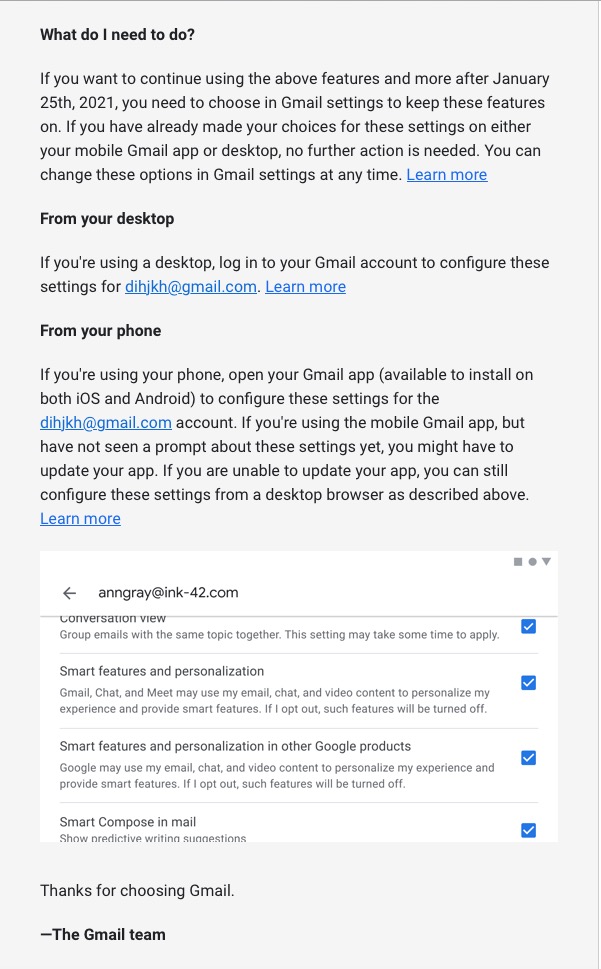
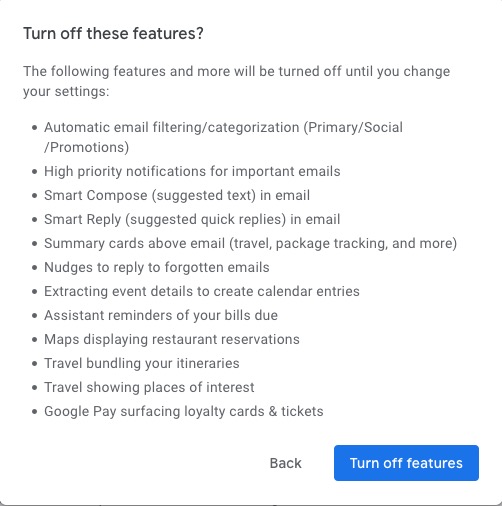
Once into the application, you receive a screen like this one …
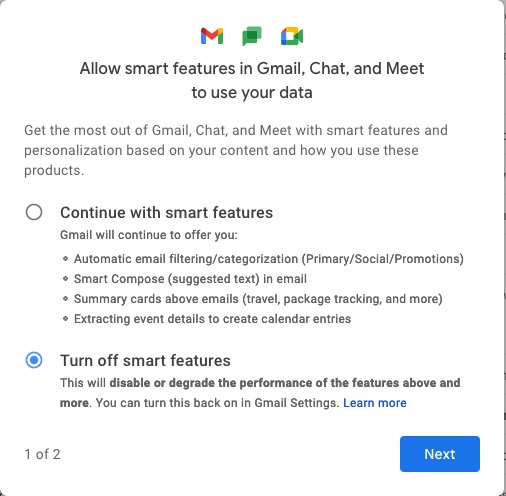
I’ve now switched off these personalisations, but what I was doing was very clearly explained.

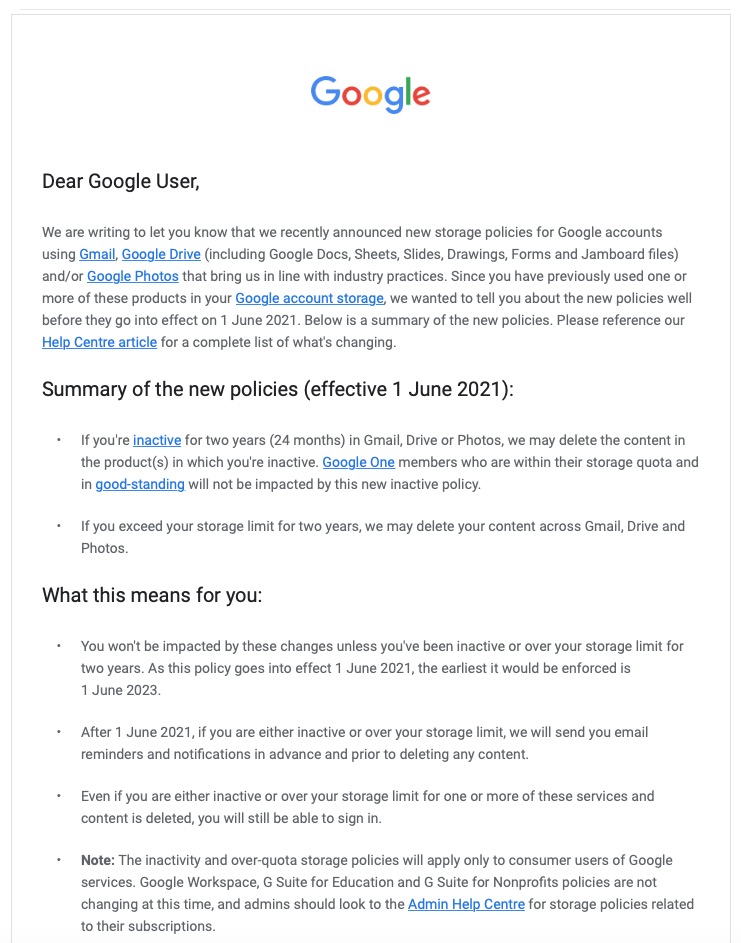
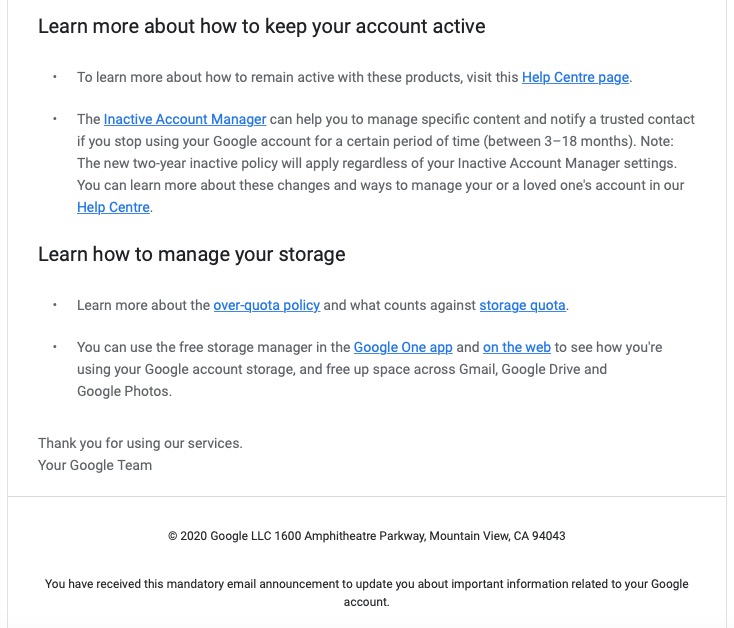
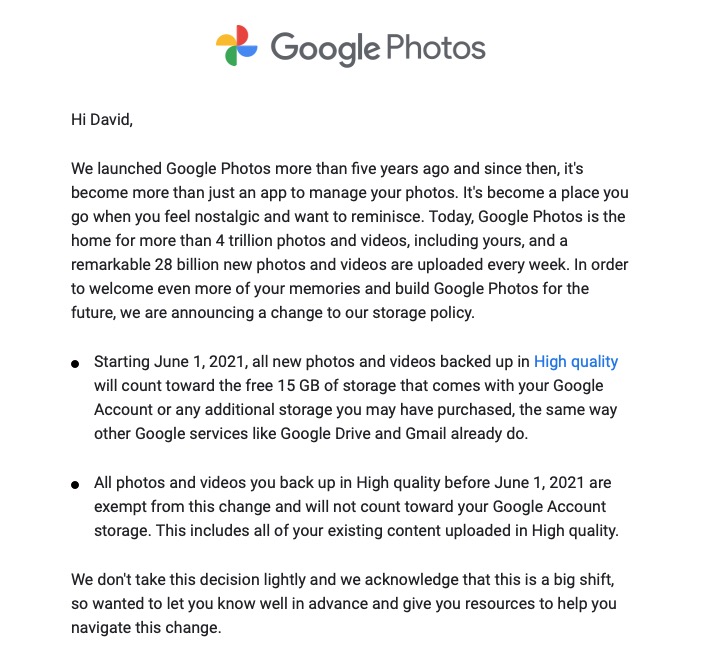
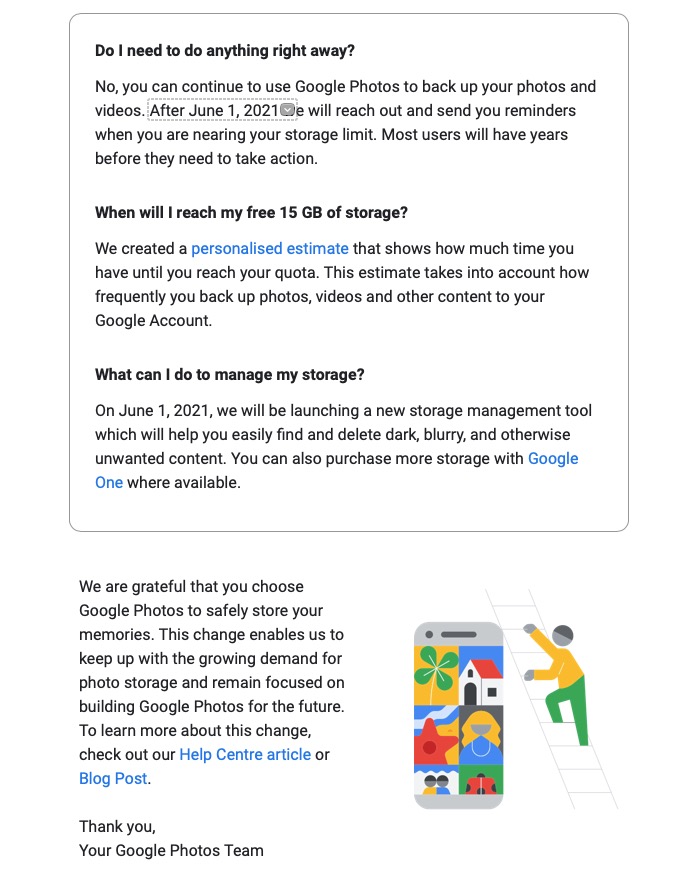
Then there is this advance warning of changes to the storage policy that covers your Drive and Photos accounts. [I must do something about this as I have a number of Google accounts knocking about.]
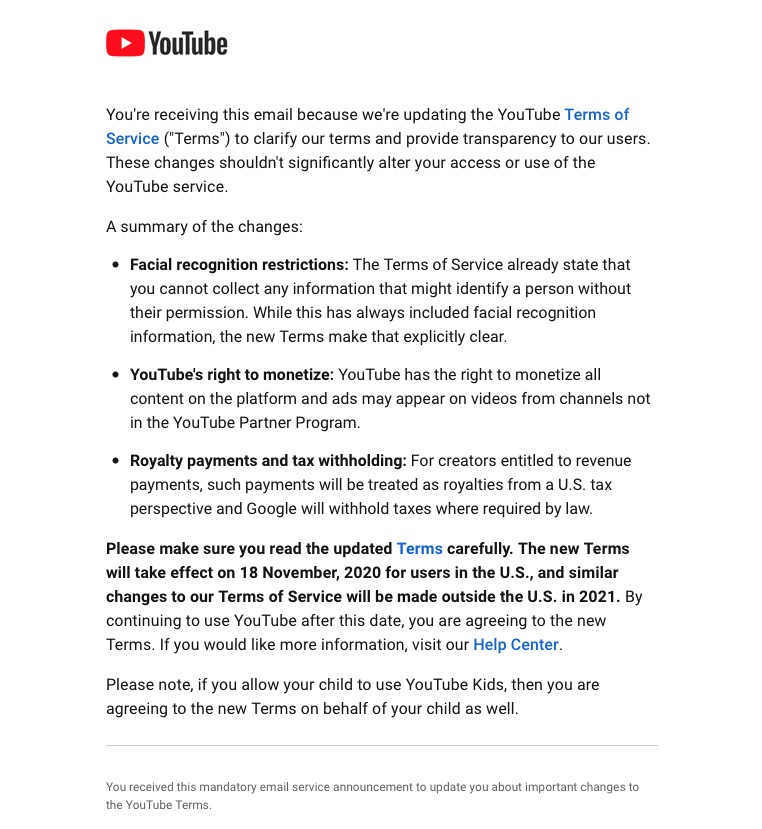
A clear explanation of changes to YouTube – not ones I like, but there’s no attempt to hide what they intend to do, and it provides a hint that they will apply to us later this year when Google leave Ireland for the US.
Changes to the Google Photos policy which is causing some distress, but is explained clearly and gives you a lot of time to work out how to use the service after June 1st 2021.
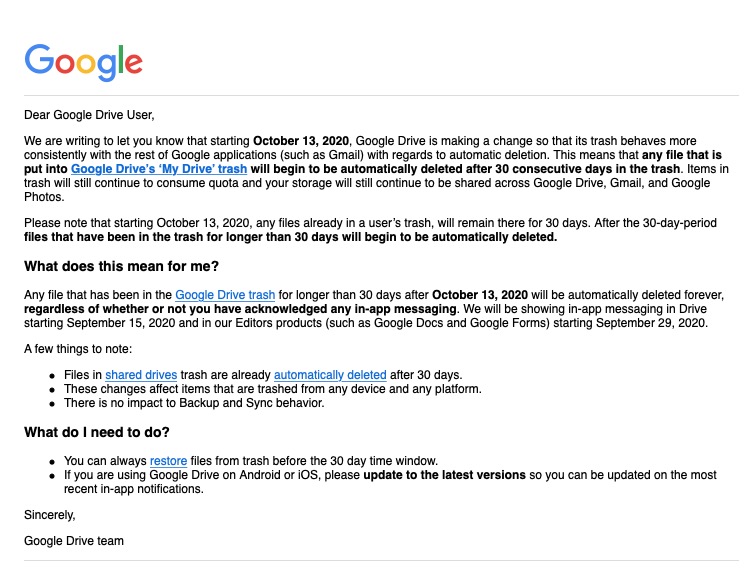
Early notice of the intended changes to Google Drive, and how files will be deleted.
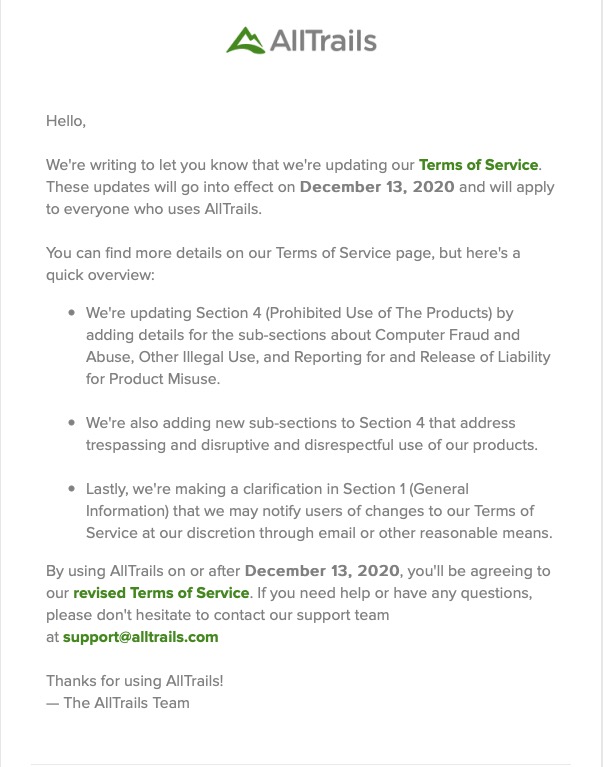
Finally, another company explains clearly how and why it’s changing it’s Terms and Conditions – not something WhatsApp did. Shame on them!
A personal reflection on “Do online courses spell the end for the traditional university?”

My daughter drew my attention to an article in The Observer yesterday … Do online courses spell the end for the traditional university? It’s a really well-written summary of where we are today with online higher education. I don’t think anyone has quite worked out how the business model will end up however. I’ve always felt that accreditation by a traditional university is probably the best way – and that is why Edinburgh’s attempts are interesting.

However, I’m convinced that it’s culture that’s the most significant barrier to change and that this is the most significant barrier to adoption of change. The emphasis is still on research in the older universities; that’s where cudos is gained and that is where significant funding comes from. I can’t see them wishing to move away significantly from that mission. However, we may see new-style universities embracing MOOC and offering accreditation of such courses, and adopting strongly blended learning onsite and supporting online distance learning as well as a counterpoint for under-graduate education. Or, and this will really challenge a large part of the Higher Education marketplace, well-established prestigious institutions will setup different organisations, franchise their brand to others, or have collectives of partner organisations that work with them to award their degrees. This has all been experimented with before. Some institutions have got their fingers burnt in the process, but the incentive to do it again – at least onshore in the UK – is compelling.

This will lead inevitably to consolidation in the sector and less universities and probably more local attendance at universities, if attendance at all. There will have to be real added-value to attend a university as an undergraduate; that’s why another article in The Guardian – Our universities are at great risk. We must act now to defend them – should be read alongside the one in The Observer. My take on the second one is that it is not just academics that need to change, but more importantly the policy-makers and then the administrators. The Guardian article is also interesting because it foresees the student as a customer determining the future of those organisations. Not so much a beauty contest, but more an outcome fest – “what can you deliver for me, that will ensure my future success?” That’s not a bad thing in the fee and debt culture they’re being forced to embrace, but it does mean that university undergraduate education has already changed and will never be the same again.

Of course, all internet start-ups benefit (in the States especially) from vast amounts of venture capital. The culture appears to be more able to embrace technological change and be able to risk failure. What however is significant is that the idealism that drives the innovator eventually has to generate a return on investment; so the success of Udacity, edX, or Coursera is not assured. There’s still time for a different model to emerge that combines the best of online and onsite higher education. However, I still remain convinced that the world of higher education is changing and there will be a lot of casualties along the way for those institutions that don’t address these threats to their current business model.

[Update: On the same day I wrote this, Clay Shirky writes a very entertaining and illuminating blogpost on Napster, Udacity, and The Academy – read it!]