
Second guessing what Apple will do next

Why I’m bothering with this post, I’ll never know. However, I know of at least one other person considering what to do when his iPhone 4s goes “end of life” this autumn and I guess there’s probably plenty of others. So this is just a “state of the Apple nation” post – where I am, what I’m thinking of, what needs to be done, and what can/should be done in an area where Apple never makes long-term decision-making easy.

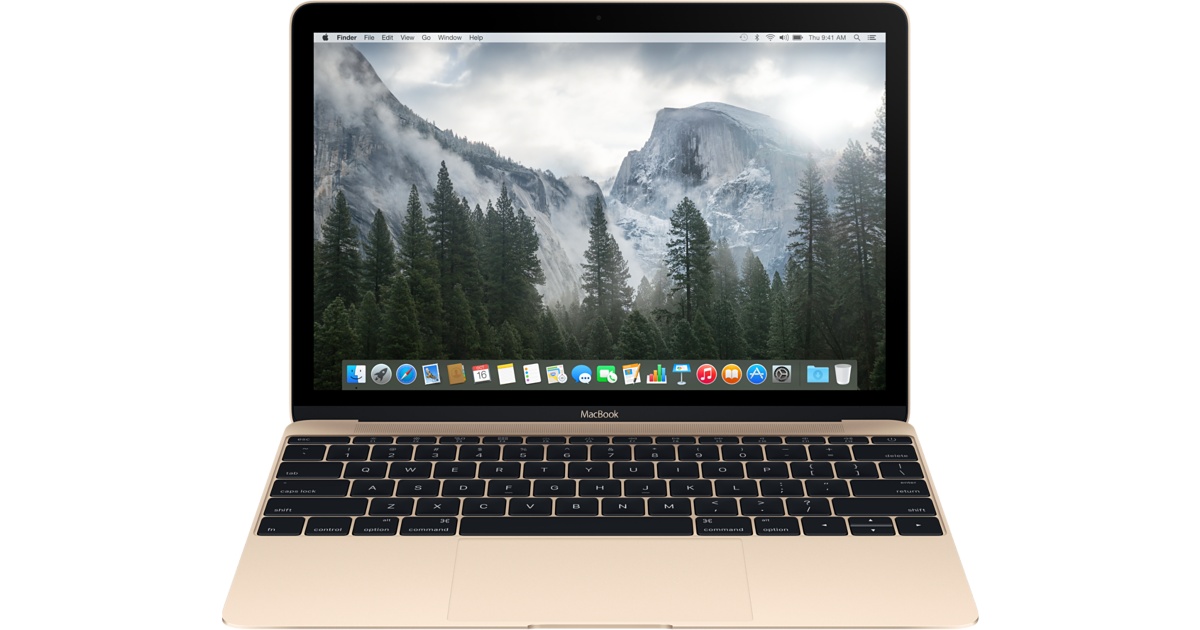
So why the shiny MacBook as a featured image? Well … I’m betting on that being the future for Mac’s portable laptop range, so it needs some serious consideration as a replacement for Jenny’s aging (well, mine actually) 7+year old MBP. Even though we didn’t do the Yosemite upgrade it’s running slow, and now with Jenny’s increasing interest in photography and using Lightroom, a replacement needs to be considered.  So … she could have my mid-2012 MBP which is still screaming along and has just had a battery and top case (keyboard) replacement following the expensive coffee-spill episode, and I could take on a new MacBook … couldn’t I?

It’s got a lot going for it – light, retina-display, fast storage and sufficient RAM – and then it’s got a single USB-C port! Where did that come from? Thunderbolt and Lightning, very, very frightning. Out with the old, in with the new – this could very well be the future of expansion ports, and the demise of Apple’s proprietary ports. Well, actually the opposite. Apple appears to have invested in USB-C and made it a standard – it’s already to be found on Google’s Chromebooks and no doubt more will follow. The exciting thing (to me) is that it means that the accessory market, and the third-party hardware solutions will be opened up and Apple has acknowledged that by controlling the patents on the standard, it doesn’t need to control the interface. The accessories (like this USB-C hub) have already started to be advertised.

So in a nutshell – USB-C appears to be “a good idea”. One of the first accessories made available is this little beauty – the snapily titled USB-C Digital AV Multiport Adaptor. I quote from the website …

“The USB-C Digital AV Multiport Adapter lets you connect your MacBook with USB-C port to an HDMI display, while also connecting a standard USB device and a USB-C charging cable.

“This adapter allows you to mirror your MacBook display to your HDMI-enabled TV or display in up to 1080p at 60Hz or UHD (3840×2160) at 30Hz. It also outputs video content like films and captured video. Simply connect the adapter to the USB-C port on your MacBook and then to your TV or projector via an HDMI cable (sold separately).

“Use the standard USB port to connect devices such as your flash drive or camera, or a USB cable for syncing and charging your iPhone, iPad or iPod. You can also connect a charging cable to the USB-C port to charge your MacBook.”
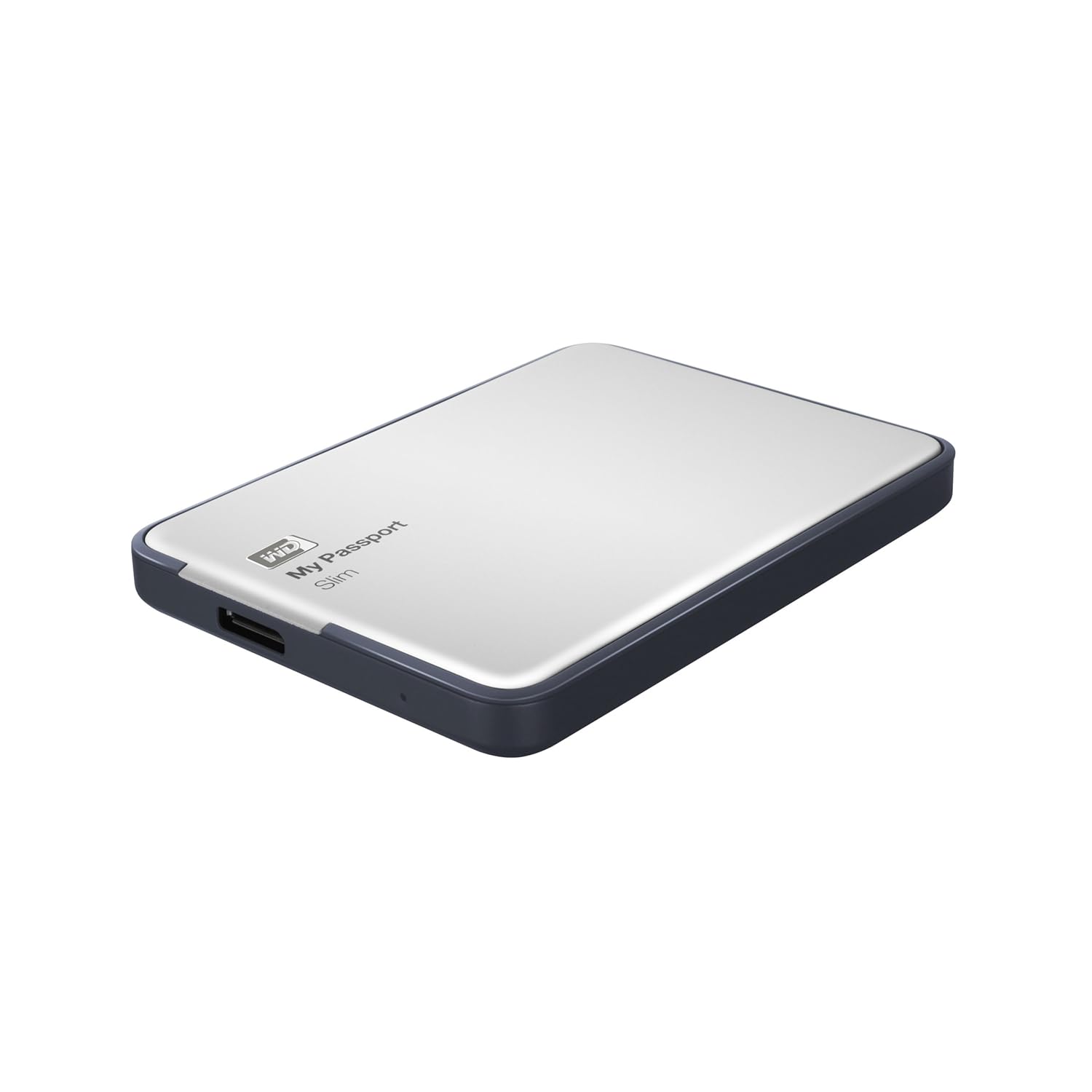
This means I can have my external USB-3 WD My Passport Slim disk connected, with a charging cable all through a single port. I could even mirror the display to a TV at the same time – if I wanted to. That’s really quite neat! But then again this battery-powered WD My Passport Wireless with SD card drive is really itching to join the “Just thoughts” household – but I’ll leave that for another post!

So why am I getting excited about an expansion port, and what on earth has that got anything to do with an aging iPhone 4s, or indeed the equally aging iPad 2 I have, which I mistakenly upgraded to iOS 8; something I didn’t do to the iPhone 4s … thankfully, because the iPad is really painfully slow at times.

Well take a look at this set of rumours about an iPad Pro (or Plus) with a USB-C port and perhaps a stylus. I think that every Lightroom useer who’s interested in photography welcomed the arrival of Lightroom Mobile, but with my old iOS gear – it’s just not practical to consider using it. So … an upgrade to the iPhone/iPad must be on the cards, just from the photography side of things – even if they weren’t both about to go “end-of-life”. If an iPad witha USB-C port is launched that could be a really good alternative to a MacBook for Lightroom on the road, so to speak.

However … will the iPhone 6s (or 6s Plus) also have a USB-C connector replacing the Lightning port. Could I therefore consider not replacing the iPad and instead have a MacBook and iPhone 6s – now that might be very nice, and you can see where my thoughts are going … can you see any reasons why that’s not a good strategy, given that I have the iMac for my serious Lightroom work.

It all depends on USB-C you see!

[Update: A recent announcement that Apple is seeking to unify the USB 3.1 and Thunderbolt ports with its new USB-C port which is not available on the new MacBook …

“Because Thunderbolt 3 is compliant with the USB-C standard and USB 3.1 specification, the cabling will also simultaneously support DisplayPort 1.2, third-generation PCI Express, and power supply for recharging notebooks at up to 100 watts.”

Also …

“The next generation of the high-speed Thunderbolt specification was announced on Tuesday, ditching the legacy Mini DisplayPort connector for the new smaller, reversible USB-C standard, and offering transfer speeds of up to 40Gbps with high-end cables.”]

iCloud, Google Drive, Amazon Drive, Dropbox – what do you do for sharing photos?

If you’re interested in storing and sharing photos in and from “the cloud”, your world has become a little bit more confusing just recently, and will continue to do so whilst the big players position themselves to provide you with services. This post is not about using flickr, 500px, SmugMug or behance, or whatever – that’s another subject altogether. This is about principally cloud storage and sharing with an emphasis upon photographs.

Let’s start with Dropbox, the first really successful store and share service, and apart from a few privacy/security glitches a little while ago probably the most respected of the solely cloud storage services. If you use Dropbox, and only Dropbox, and you like using Dropbox – perhaps with auto-upload from your smartphone switched on – you can stop reading this post. Nothing has changed. Whew! Yet! Of course you might wish to consider the alternatives …

An alternative might be to use Amazon Cloud Drive which with its offer for Unlimited Free Photo and Video storage for Amazon Prime subscribers would appear rather attractive. However it’s functionality is very basic and (it would appear from my testing) the only sharing you can do from it is individual photos and that by email only … no thanks! It fails for me. [Another similar option you could use might be Copy, and there are others.]

Google Drive has become a huge success for photographers due to it allowing up to 2048×2048 pixel images to be stored without counting towards your free storage allowance. Plus, if you want to store full-size images you can do so up to the free limit of 15Gb and beyond that there’s a charge which is reasonable. [See Table below for comparison of costs]. Google Photos and Picasaweb have been integrated, but still retain for old-skool Picasaweb users like me, their separate identities – that’s cool and long may it continue (but I suspect it won’t for long). On the desktop you can use Picasa to edit and upload your images to Google Photos (Picasaweb). On your smartphone you can set your camera to automatically upload your photos, and just recently Google Photos has become fully integrated with Google Drive, meaning you can see your photos uploaded from your device in a Folder on your Google Drive. Also because your Google Drive is a Physical Folder in your desktop file system you can drag and drop using normal file system utilities. Marks out of 10, say 8, because you can do almost everything you might want to with photos, it’s just too complicated to get a 10; too many options or pathways. But if you’re IT-savvy or are able to invest a little time in getting the workflow right for you – this route will not let you down.

However Google and Apple are NOT friends! Hence this post.

So today I upgraded to Yosemite 10.3.3 on my #MBP and of course (as Apple is want to do) the iPhoto icon is taken off my Taskbar and replaced by the Photos one – what a cheek! If I still want it there, it is available in my applications folder so a quick drag back to the Taskbar makes it readily available again, but the old Library has been migrated to a new one capable of being read by Photos too); but should I consider the iCloud Photo Library service which comes with the new Photos??? As an Apple user – iMac, Mac Book Pro, iPad and iPhone – it might appear that I’d be mad not to consider using iCloud Photo Library, but what does it actually give me? What might be the sharing opportunities for photos (and videos) stored on iCloud using social media services such as Google+ which I use a lot? How about integrating iCloud Photos with a blogging service such as WordPress (or Blogger). I think you can see where I’m heading.

Just a little searching this afternoon finds no posts on the subject of iCloud-Google integration, or anything about sharing from iCloud Photos. I guess I need to enable iCloud Photo Storage to find out if it’s possible, but FIRST, perhaps I need to clear out my iPhoto Library so that loads of rubbish isn’t uploaded because immediately I enable iCloud Photos, all my Photo Stream moves out of free storage and becomes part of my 5Gb free entitlement. So you can see 15Gb (Google), 5Gb (Apple) doesn’t match up! Not a great move Apple! Google 1: Apple 0.

[UPDATE: Since writing the above paragraphs I’ve found out that Apple is confusing things more than I thought possible by distinguishing their iCloud Photo Library from iCloud Photo Sharing. The first counts against your 5GB, the second is free. It’s not clear to me if you can effectively reduce your storage costs by sharing them, but I suspect not as the former is a multi-format full-resolution facility, the latter is for web-sharing and commenting – another social network indeed – shall we call it Apple+ ?]

Then … how does the integration between iMovie and Photos work … “iCloud Photo Library stores every photo and video you take, making them accessible from your iPhone, iPad, iPod touch, or Mac and on iCloud.com”. Presumably you can upload stuff from the desktop to iCloud.com by installing iCloud on your Mac or PC, but this isn’t being pushed as a feature. Hopefully it is usable, because like Google Drive, your iCloud Drive is a Physical Drive in your file system. It’s just not really intended for anyone who has a requirement that extends beyond Apple. Love them as I do, this is not at first glance, a great move. Google 2: Apple 0 [I will update this paragraph if I’ve maligned them 😉 ]

So how much would a chargeable monthly service cost from Google and Apple

Google                                                               Apple

15 GB Free 5 GB Free
100 GB  $1.99 20 GB £0.79
1 TB $9.99 200 GB £2.99
10 TB $99.99 500 GB £6.99
20 TB $199.99 1 TB £14.99

You can see the Google offering is much more attractive. Google 3: Apple 0. Meanwhile, Google has attempted to pre-empt any competition that iCloud Photos could create by providing a route for iOS users to cut-out Photostream (which in itself is on borrowed time given iCloud Photos) altogether and share photos and videos direct to Google+ from your iPhone. Google 4 : Apple 0.

I can see a few confusing months ahead as the future of Google+ develops with the emergence of the new-branded Google Photos and Streams. I will take-on as I have before the job of Family-Techno-Meister guiding and advising all on the best path to take. Watch this space!

Why can’t Google and Apple just get along and make it easier for all of us. Of course if Google goes one stage further and just buys twitter – which it might …. where will that leave Apple?

Next post on “What do you do with storing and sharing Videos”