Some myths examined, some truths revealed, some issues still to be resolved.
An overview of North Cardiff
In this short post, mainly consisting of maps I’ll talk about the suggested tramway that supplied building materials to the construction of the Lisvane and then Llanishen Reservoirs. Then show a couple of clips relating to the New Cemetery Station from Bob Price, and posing a question about another bit of railway masonry which I’d love to have explained to me. Finally, just look at how old Llanishen once looked and how Roath Park Lake came into existence.
It has been put to me on more than one occasion that there was a tramway that ran down from near where the old Cefn Onn station used to be to the reservoirs built by Cardiff Corporation. The map evidence suggests otherwise …
Lisvane Reservoir shown on map of OS 6″ First Series: 1840s – 1880s
Lisvane & Llanishen Reservoirs shown on map of OS 6″ Second Series: 1888 – 1913
If you can find anything that looks like a tramway on these maps, please tell me!
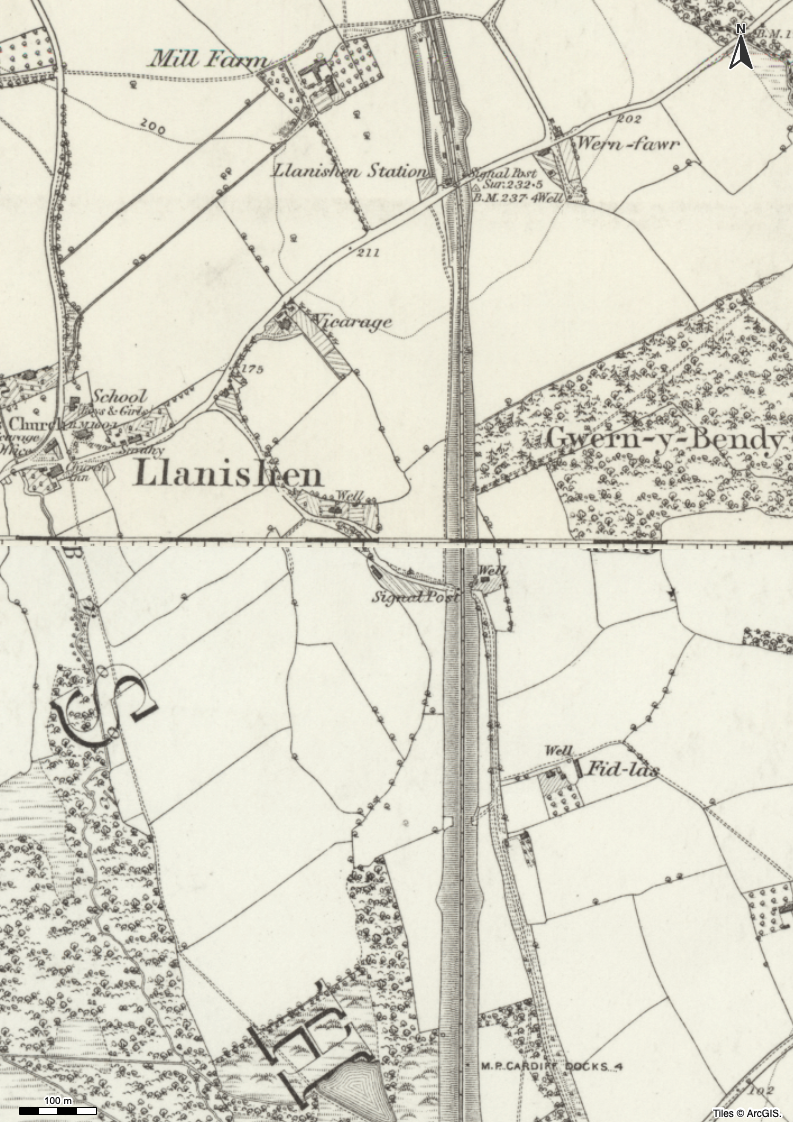
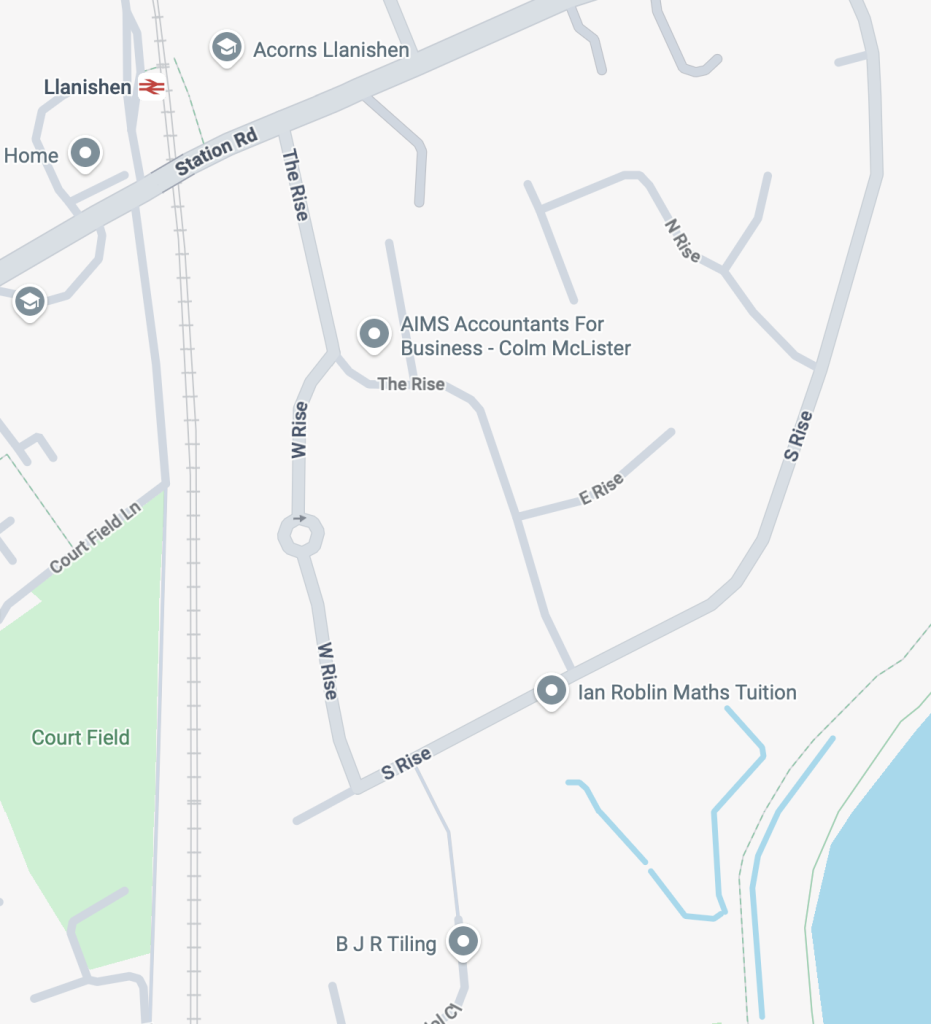
Literally, the day after I wrote that statement, I went back to Bob Price’s website (see link above), and watched his review of what he’d done in 2025 and he mentioned that he’d done some work on Llanishen Reservoir, which suggests (with further evidence in the comments below the video) that there was a link from just 200m south of the station crossing where west Rise, The Rise and presumably South Rise to the reservoirs. The link was short-lived, possibly only 3 years and was abandoned/demolished when the reservoirs were completed. There is however contradictory evidence mentioned in the video of the link coming down from north of Llanishen Station. Bob has indicated there’s another video on the subject to follow. I await that with some interest!
A couple of them captured my attention because I travel the line from Llanishen to Cardiff a fair bit.
So there was a “station” between Heath Halt (built later on) and Cardiff, but what about this piece of railway masonry on the north side of the Wedal Road bridge – was it connected to the wartime activity in Heath Park? It would be interesting to find out.
The “platform” only appears on the west side of the line – what is it?
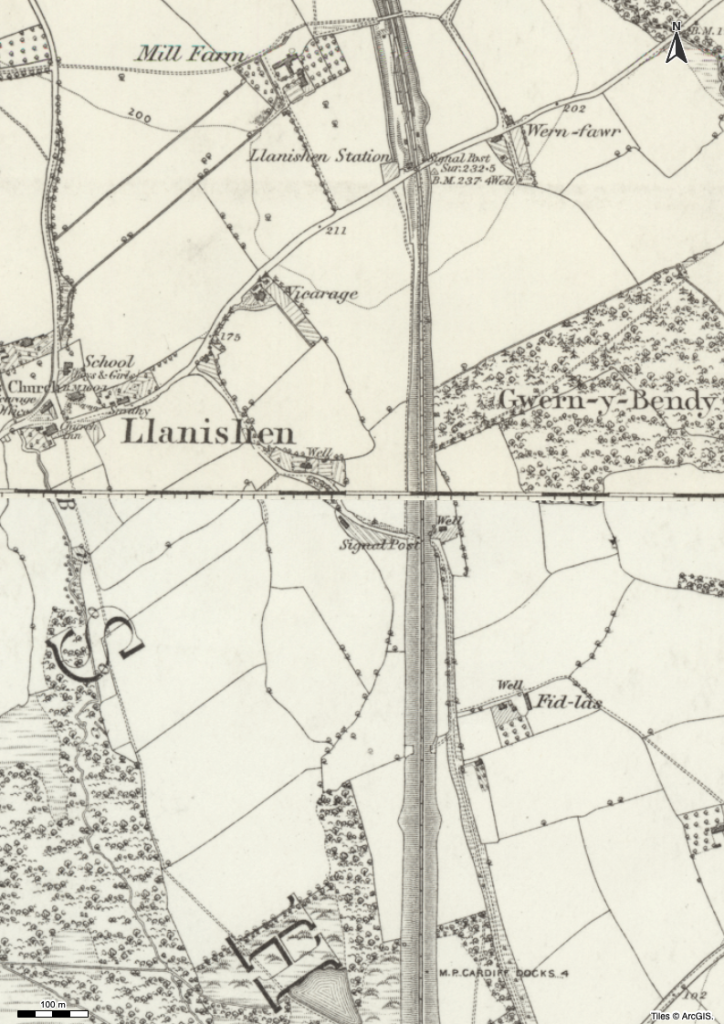
Finally, it’s always interesting to see bits and pieces of old Llanishen, the brick works for instance at Rhyd-y-penau, the Fid-las Farm and of course the fact that our house just doesn’t exist on the map.
Finally, a couple of maps that show Roath Park Lake – before and after …
Note the disappearance of the Llanishen Brick Works and the emergence of Fiddles Road as the city began to expand at the beginning of the 20th century.
My previous post on our experiences in getting solar panels, a battery + inverter, and early experiences with switching tariffs ended in September 2024. The initial installation had been completed 12 months earlier and we’d spent a while looking at different Octopus Tariffs before deciding that Agile Octopus was the one that best suited our needs. We did not have many panels (11) and the battery was sized to provide storage capacity for them, and power the house during the whilst topping-up from “cheap”er electricity overnight.
This has worked really well, and the Infrared panels from Herschel ensure that we have a warm kitchen to walk into first thing in the morning. We still haven’t made significant use of the IR heater in the garden room but know it’s there if we need to have heat there in a cold snap.
So Agile Octopus for Input and Fixed (12m) Octopus Export seemed to be the ideal pairing. However with 48 import sessions a day, one would have to just stab at the best times to charge the battery and which slots to avoid importing energy from the grid. At this time we were not really looking at recovering any cost from the Grid by exporting and at 16p a kWh we were only getting a small amount of income.
Then I discovered Wonder Watt – an app that I could schedule the times of import from the grid. This app not only was a time-saver – meaning that I didn’t have to worry about going into the GivEnergy dashboard to change settings – which is not a trivial exercise. Soon after trialling the app, I willingly subscribed for a year’s use which cost me c.£60, and I will renew later this year as it’s saved us far more than £60.
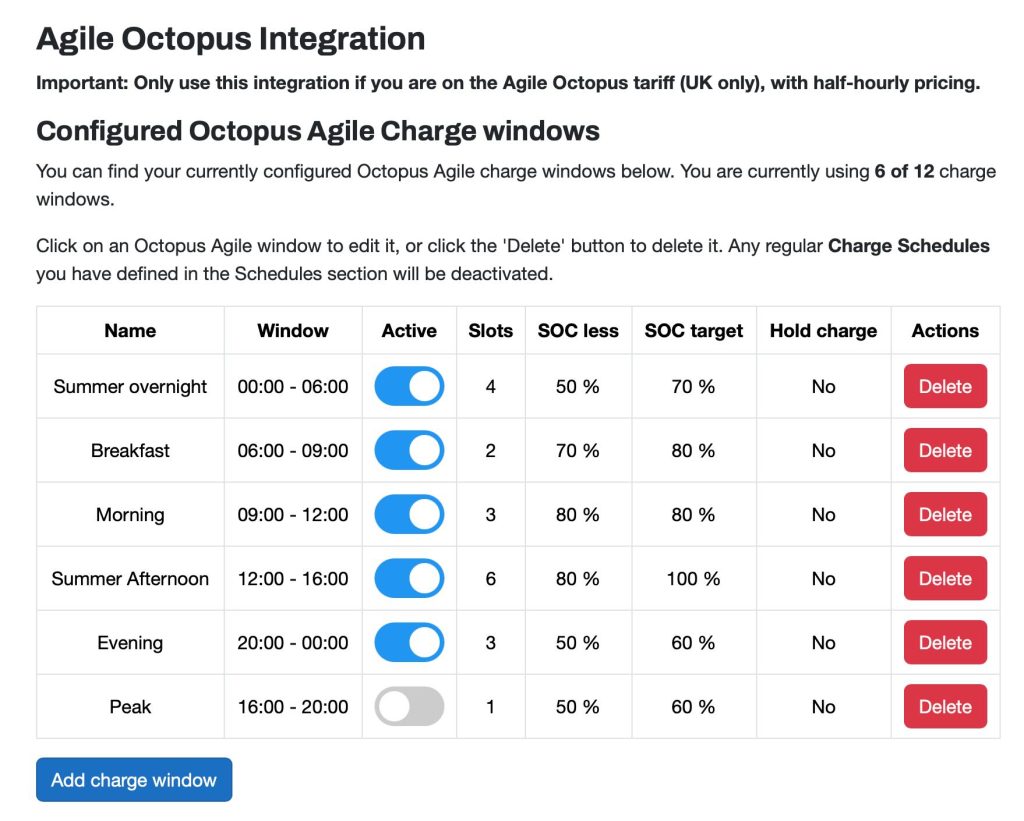
At the heart of the app is that you can set up a max. of 12 charging windows, which you can constantly change if you wish. [You can also leave Wonder Watt to make an optimal selection based on local weather forecast – but I don’t!] Below you can see the charging windows that are Active, and the one that is inactive (the high-cost 16:00 – 20:00 Peak charge session). For all the Slots chosen within each window, should the battery level fall below the SOC figure then the battery will charge up to the SOC target figure, subject to the tariff being below a cost (ie 18p kWh) which you can stipulate, or leave blank to charge at any cost..
So the Summer slots I’m using (5) are these …
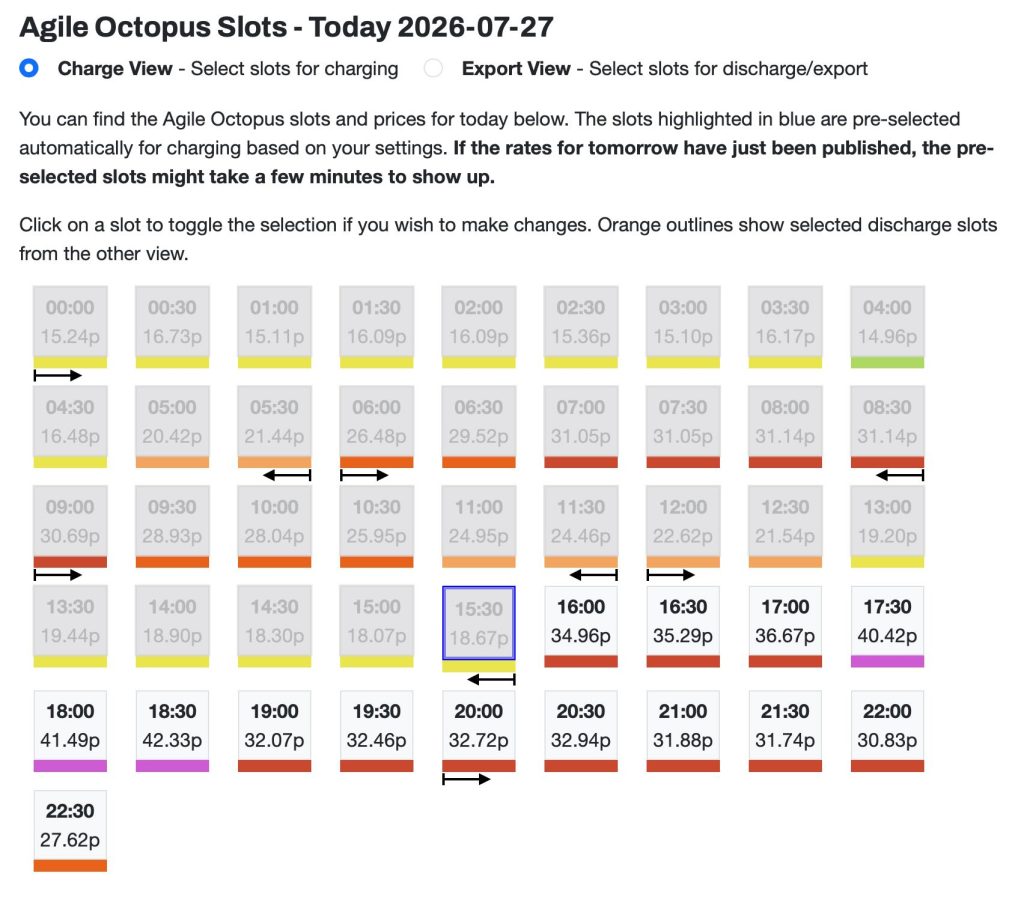
… and for today, as I type this, these are the tariffs for the 46 slots …
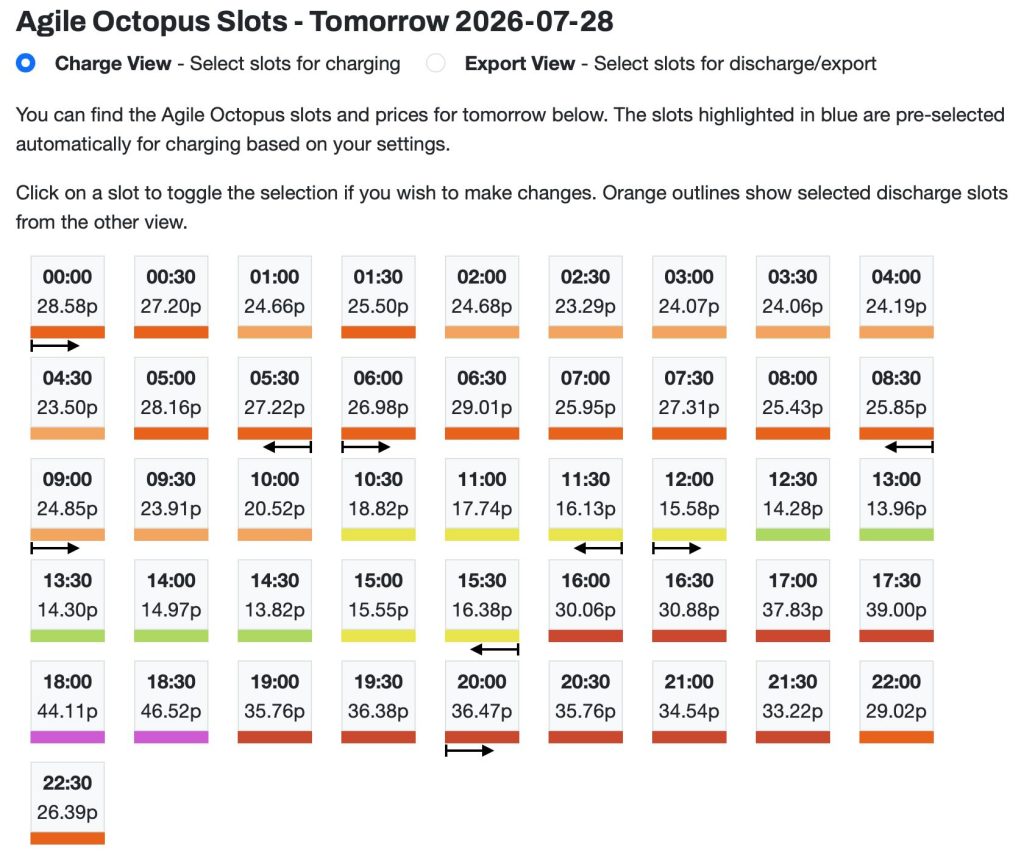
… so you can see the variation and the need to manage your call upon the grid to minimise costs. Below you will see the tariff charges for tomorrow which are published at about 16:00 and the ones potentially selected by Wonder Watt for grid import on the basis of the criteria set in the Charge windows table (above).
You can see the variation from one day to another, hence the need for Wonder Watt ‘appiness!!!
This of course caused some concern, but the immediate concern we had of not being able to schedule the inverter for charging slots was ameliorated by the news that a separate company GivEnergy Software was still in business and if we were to subscribe (a cost of £4.99pm) things could continue as normal … phew!
A few weeks later we had notification that a recent start-up Virtual Power Plant (VPP) company – Axle – was prepared to pay our GivEnergy Premium subscription and would guarantee to pay us £10pm if we were to sign-up to their service which requires us to accept Events of an hour long when they would take power from our battery and sell it to the grid. They offer a “tariff” of £1 kWh which is significantly better than Octopus Fixed Export (now 12p kWh) which we would get as well, thus £1.12 kWh for an hour of export.
Now this where the maths gets really interesting. The max. tariff that Octopus are able to charge us for Agile is .99p kWh, so we would still be in credit if we charged and discharged at the same time, at the worst possible Octopus Import tariff – which has never happened!!!! [The highest import tariff I recall was 50p kWh in a window (16:00 – 20:00) when we wouldn’t be charging anyway.
So as long as we ensure that the battery is fully, or nearly fully charged, before an Event, we can export and benefit to the sum of £1.12 kWh. So far we have participated in 6 Events and our account shows us that we have earned c.£20. Looking at the battery statistics it appears that an hours discharge to Axle drains the battery by c.33%, so that is manageable as you have 24hrs to vary your Wonder Watt windows if necessary.
So a little more about Axle. Announcing an Event you get an email which gives you 24hrs notice of it happening. If you don’t want to take part you can opt out from your account screen.
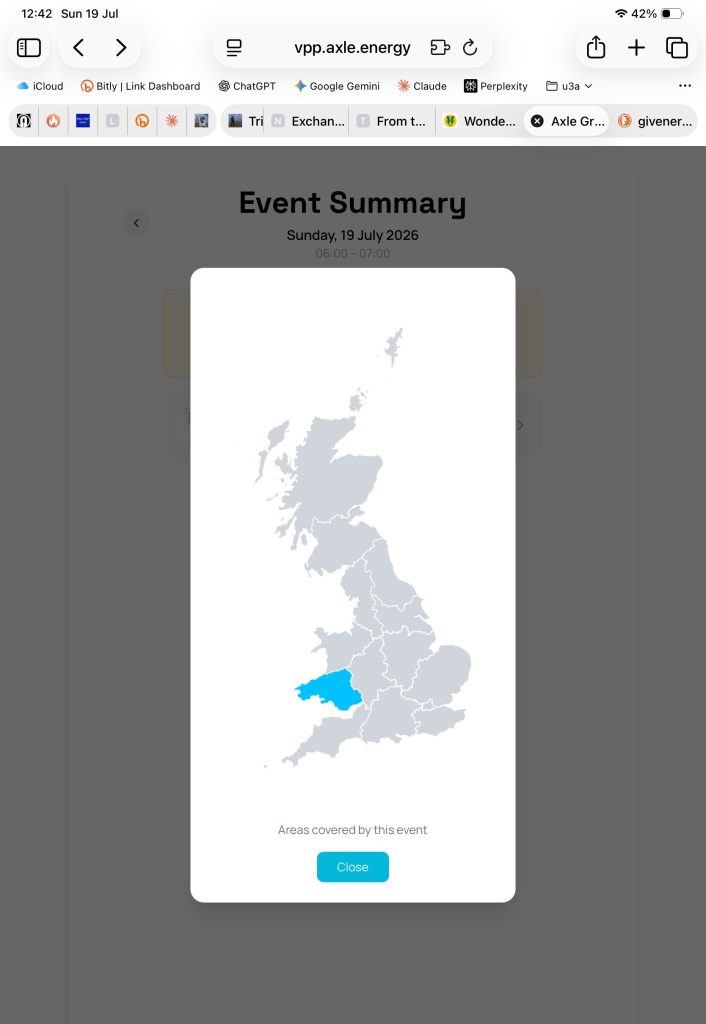
Invitation to participate in an Export EventIt’s selective by region, so this one was targeted at only South Wales
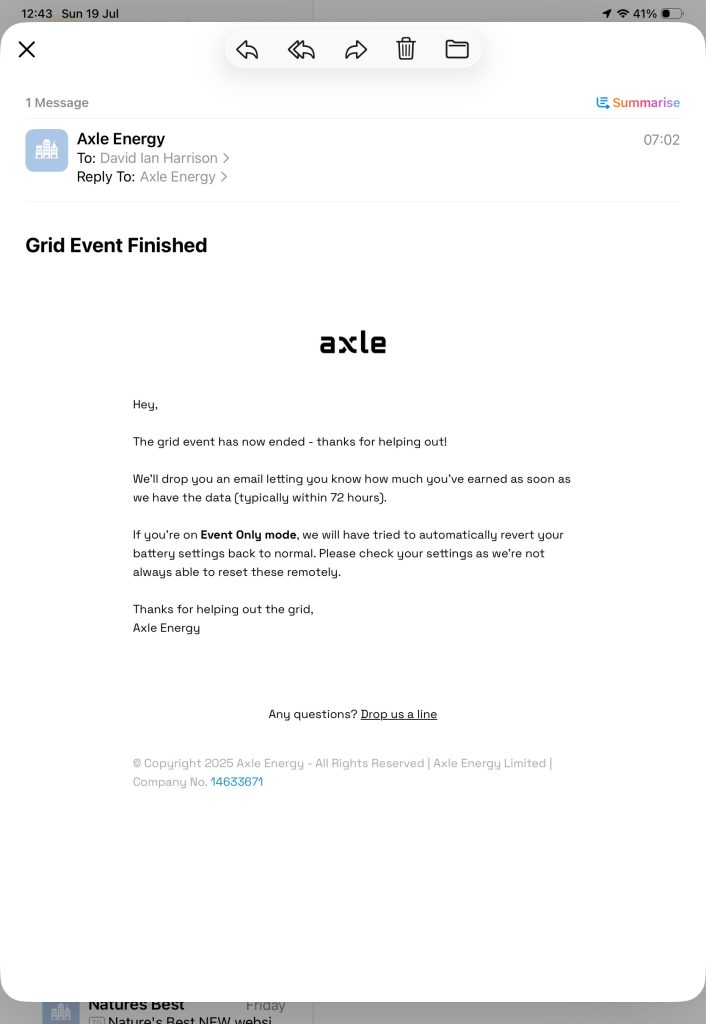
… then when it’s finished, you get another email …
The Event has completed, and you then wait to see how much you have earned.
… and within 72hrs you get another email ..
Your Axle account screen
So that’s about it. Has it worked for us … short answer, yes! We needed to ensure a warm house, and were interested in reducing our costs from the £3600 we were paying to British Gas to something more acceptable.
If you can read this spreadsheet you will se how this has been achieved.
Bearing in mind that during 2024 when energy prices were really high and the Energy Cap had to be introduced, we were able to reduce the amount of energy used (by clever use of the solar power), and the cost was only slightly greater than the previous year. Getting under £2000 was a marked improvement than £3600 when we were with British Gas.
This year with better management of the battery charging you can see we’ve stored more solar to the battery, to be used later, at the expense of less direct solar to home energy use.
It also looks as though our costs will be the same, or reduced for 2026, but the Axle Events will push us into significant gains – not something we’d planned for, and not something the system had been designed for. A really great result. Wonder Watt + Axle, you’ve given us ‘appiness.
Here’s the slide deck from the presentation on 23rd July.